
Central Kitchen and Restaurant Reinstatement in Singapore: What F&B Tenants Need to Know
Central kitchen and restaurant reinstatement isn't like an office. Find out what's involved, what it costs, and how to avoid a delayed handover.
Your central kitchen or restaurant lease is ending, and reinstatement isn't like handing back an office. There's a full commercial kitchen to strip out: exhaust hoods, grease traps, gas lines, cold rooms, and flooring that's been soaked in oil and water for years. Get the scope wrong and you're looking at a failed inspection, a delayed handover, and a landlord holding onto your deposit.
This guide covers what central kitchen and restaurant reinstatement involves in Singapore, how it differs from a typical F&B outlet, what it costs, and what to check before you sign off on a contractor.
Key Takeaways
- Central kitchen and restaurant reinstatement is more complex than office or retail reinstatement because of the kitchen equipment, exhaust systems, and M&E involved
- Central kitchens are usually larger and often sit on industrial or JTC leases, closer in scope to a light industrial or factory reinstatement than a single F&B outlet
- NEA and SCDF requirements around grease traps and exhaust systems add coordination that a standard reinstatement contractor may not be familiar with
- Reinstatement costs for F&B units typically range from S$8,000 to S$25,000 for 800 to 2,500 sqft; larger central kitchens usually fall into the S$10,000 to S$50,000+ light industrial and factory bands
- Start planning 2 to 3 months before lease expiry, kitchen equipment and grease trap removal take longer to schedule than standard hacking works
Why Central Kitchens and Restaurants Are the Hardest Reinstatement Jobs
Most commercial reinstatement is partitions, flooring, and repainting. A central kitchen or restaurant adds a full layer of mechanical and electrical works on top of that.
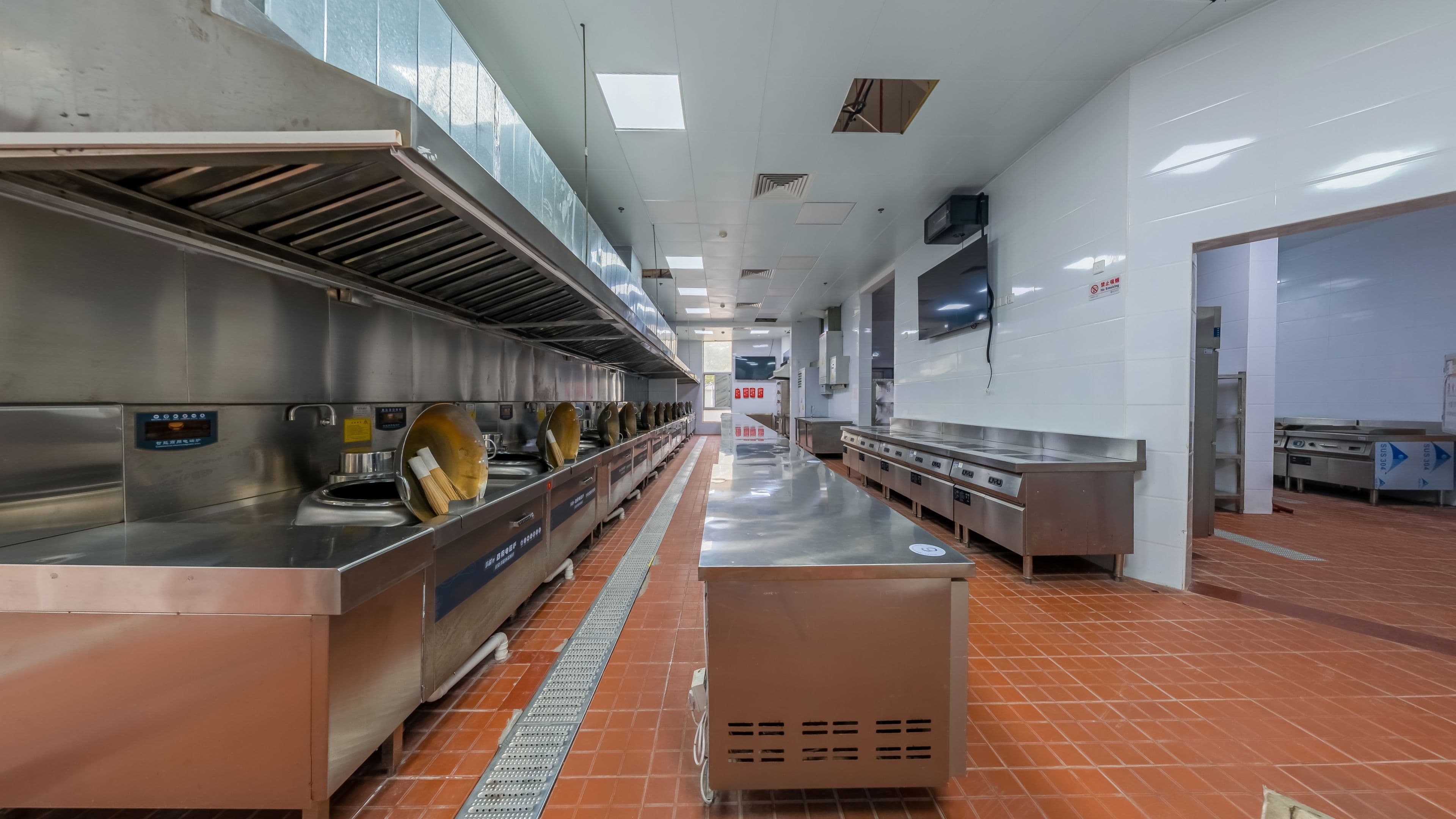
Kitchen exhaust hoods and ducting need to be dismantled without damaging shared risers or roof penetrations. Grease traps have to be removed and the surrounding area cleaned before any flooring or waterproofing work can begin. Gas lines need to be safely disconnected and capped, often by a licensed gas fitter, before the space can be reinstated. Cold rooms, walk-in chillers, and heavy stainless steel equipment need to be dismantled and removed, not just switched off and left behind.
None of this is optional. Landlords and MCSTs inspect F&B units more closely than a typical office, because grease, odour, and pest issues left behind by a previous tenant become the landlord's problem the moment the next lease starts.
Central Kitchen vs a Single F&B Outlet: What's Different
A single restaurant or café reinstatement is already more involved than an office. A central kitchen is a different scale of project again.
Central kitchens are commissary or production facilities that supply multiple outlets, so they're built for volume: larger cooking lines, bigger cold storage, industrial-capacity exhaust systems, and sometimes production or packing equipment on top of the kitchen itself. Many central kitchens in Singapore sit in industrial buildings under JTC or private industrial landlords rather than in a mall or shophouse unit, which means the reinstatement scope can overlap with a factory or warehouse reinstatement: machinery foundations, floor loading considerations, and site clearance requirements that a standard F&B reinstatement contractor won't have handled before.
If your central kitchen is on a JTC lease, the site return requirements go beyond the kitchen fit-out. Our guide on JTC reinstatement requirements covers what's typically involved, from machinery foundations to as-built surveys.
What Needs to Be Removed
The exact scope depends on your lease and what's been installed, but central kitchen and restaurant reinstatement commonly includes:
- Kitchen equipment: cooking lines, ovens, fryers, industrial mixers, walk-in chillers and freezers
- Exhaust hoods, ducting, and make-up air systems
- Grease traps and associated plumbing
- Gas piping and connections, capped and certified by a licensed fitter
- Drainage, floor traps, and floor finishes affected by grease and water exposure
- Partitions, false ceilings, and dining or front-of-house fit-out
- Signage, shopfronts, and branding elements
- Electrical points, data cabling, and specialised power for kitchen equipment
For larger central kitchens, this can also include production line equipment, racking, and machinery foundations, closer to what we handle on factory and warehouse reinstatement projects.
Don't Forget the Scrap Value in Your Old Equipment
Most of what comes out of a central kitchen or restaurant during reinstatement isn't just waste. Stainless steel cooking lines, prep tables, exhaust hoods, and cold room panelling all carry recoverable scrap value.
Most reinstatement contractors will simply haul this to disposal and bill you for it. At Yi Hui, we can also deal with your scrap metal as part of the same job, weighing and recovering the value of what's removed and offsetting it against your overall project cost, instead of treating it as pure waste.
Reinstatement Cost for Central Kitchens and Restaurants in Singapore
There isn't a single published rate for central kitchen reinstatement specifically, but you can size the project against the cost bands we see across F&B and industrial reinstatement work. For a full breakdown of what drives reinstatement pricing, see our guide on reinstatement cost in Singapore.
Standard F&B outlets (800 to 2,500 sqft) typically cost S$8,000 to S$25,000 to reinstate. Kitchen equipment, exhaust ducts, grease traps, gas pipes, and plumbing are usually the biggest cost drivers, not the floor area itself.
Larger central kitchens, especially those on industrial or JTC leases, tend to fall into the light industrial (S$10,000 to S$50,000 for 2,000 to 10,000 sqft) or factory (S$30,000 and up, for spaces over 5,000 sqft) bands, depending on the amount of equipment, ducting, and M&E involved.
Reinstatement quotations for F&B and central kitchen units in Singapore generally sit within the S$8 to S$30+ per square foot range seen across commercial reinstatement projects, with the higher end driven by kitchen-specific works rather than basic hacking and repainting.
Watch for the same hidden costs that catch out any reinstatement project: disposal fees for kitchen equipment and grease trap contents, building management permit fees, and PE endorsement if structural elements like mezzanines or machinery foundations are involved.
NEA, SCDF and Compliance Considerations
Central kitchens and restaurants come with regulatory requirements that a standard reinstatement scope doesn't. NEA requires grease traps to be properly removed and the site cleaned to prevent fats and oils reaching the public sewer. Exhaust and ducting work needs to be carried out in line with SCDF fire safety requirements, particularly where shared risers or fire-rated penetrations are involved.
Where structural elements are affected, such as mezzanine floors for storage or reinforced foundations for heavy equipment, a Professional Engineer (PE) endorsement may be required. Our guide on PE endorsement in Singapore explains when this applies and how the process works.
Why Central Kitchen Reinstatement Takes Longer to Plan
Kitchen equipment removal, gas disconnection, and grease trap works all need to be coordinated with specialist trades, not just a general hacking crew. Gas fitters, exhaust specialists, and sometimes a PE all need to be scheduled in sequence, and building management approval for after-hours or high-odour works can add lead time on top of that.
We recommend starting the reinstatement conversation at least 2 to 3 months before lease expiry for a standard F&B unit, and earlier for a larger central kitchen with more equipment and a bigger M&E scope.
Why Choose Yi Hui Metals
Central kitchen and restaurant reinstatement usually means coordinating multiple contractors: a hacking team, a kitchen equipment removal specialist, a gas fitter, and a separate company to deal with the scrap value of stainless steel equipment once it's out. That's more vendors, more handover points, and more things that can go wrong on a tight deadline.
At Yi Hui, reinstatement, heavy equipment and machinery disposal, and scrap metal recycling sit under one team. We remove and dispose of kitchen equipment, cold rooms, and exhaust systems, handle the reinstatement works that follow, and recover the scrap value of stainless steel and metal equipment to help offset the overall project cost. You get one contract, one chain of custody for everything removed from site, and a certificate of disposal for equipment and materials that need documented proof of removal.
With over 19 years of industry experience and a BCA-registered, bizSAFE and ISO-certified team, we've handled reinstatement and equipment removal across offices, retail, F&B, factories, and JTC properties in Singapore.
You might also like
Reinstatement Cost Singapore (2026): Why One Quote Is $5K and Another Is $8K
Not all reinstatement quotes cover the same scope of work. Find out what affects pricing, what hidden costs to watch for, and how to choose the right contractor.
Returning a Factory in Singapore? What You Need to Know (2026)
Preparing to return a factory? Find out what reinstatement works are typically required, how long they take, and what to expect before handover.
PE Endorsement Singapore: What It Is and When You Need It (2026)
Unsure if your reinstatement works require PE endorsement? Learn when it's needed, how it's arranged, and what to expect before work begins.
Speak With Us
Got something to clear, dispose of, or reinstate? Drop us a message and we'll get back to you within 1 to 2 business days.
Yi Hui Metals
23 Tuas South Street 1, Singapore 638033
